

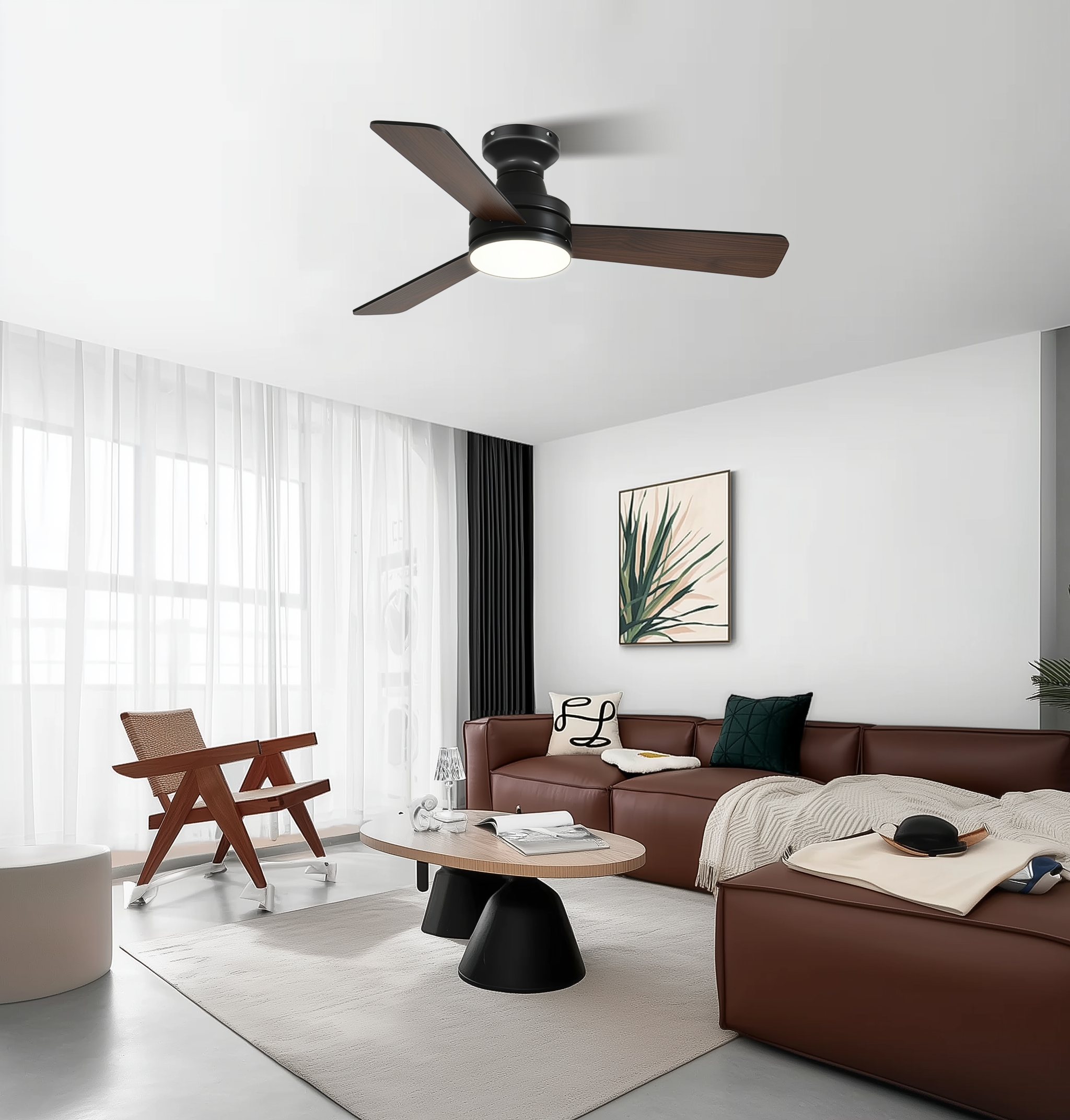
A user-first look at why this matters
When you pick a fan for an outdoor gazebo, you’re solving more than heat — you’re balancing comfort, safety, and ambience. Lately smart options that combine a large ceiling fan with light and app-based controls have become popular because they promise precise airflow and integrated lighting without extra wiring. After the record summer heatwaves of 2023, many homeowners realized that choosing the right fan affects evening comfort and even energy bills. A few practical terms to keep in mind up front: blade sweep, CFM (airflow), and motor type — they’ll help you ask the right questions at the store or on product pages.

What “airflow stability” and “light control” mean for everyday use
Airflow stability is about consistent circulation across the seating area, not just a gust near the blades. It ties directly to blade sweep, blade pitch, and motor responsiveness. Light control means more than dim-to-bright — it covers color temperature, zoning, and how the fan integrates with other smart devices. For owners who entertain, steady CFM across the gazebo keeps guests comfortable; for those who read or work outdoors, tunable white light reduces eye strain. When these systems play well together, the space feels intentionally designed rather than bolted-on.
Key features to evaluate (from a user perspective)
Look for three practical capabilities:
- Balanced airflow: a well-matched blade sweep and motor (DC motor often offers finer speed control) for low-vibration, even circulation.
- Smart lighting flexibility: multiple scenes, color temperature control, and smooth dimming without flicker.
- Durability ratings: an IP rating appropriate for covered outdoor spaces and corrosion-resistant finishes if you’re near the coast.
These features map directly to real-world comfort, energy efficiency, and long-term satisfaction.
Installation basics and common mistakes to avoid
Installation isn’t glamorous, but it’s where many projects go sideways. Common missteps include undersizing the blade sweep for the gazebo footprint, neglecting downrod length for adequate circulation, and assuming all smart integrations are plug-and-play. A frequent oversight: matching the fan’s airflow specification to the actual area — don’t guess. Try to test a sample or see the fan in a similar sized space if possible; simple math alone won’t capture ceiling height or obstructions.
Smart controls: convenience and pitfalls
Smart controls add convenience — remote scenes, scheduling, and voice commands — but they introduce complexity. Connectivity drops, firmware quirks, and incompatible hubs are real concerns. If you rely on home automation for safety (motion-triggered lights or scheduled night cooling), make sure the ecosystem supports fallback modes. In short: don’t let a graceful app demo blind you to long-term reliability — ask about OTA update policies and local control options.
Choosing the right fan: a practical checklist
Use this user-centered checklist when comparing models or brands — and yes, it’s okay to be picky:
- Measure your gazebo: area, ceiling height, and nearby obstructions.
- Match blade sweep to area; larger sweeps for open spaces, compact for intimate nooks.
- Confirm motor type (DC vs AC) and expected RPM ranges for your noise tolerance.
- Check CFM ratings at different speeds — peak CFM only tells part of the story.
- Verify smart protocol (Wi‑Fi, Zigbee, Z‑Wave) and confirm compatibility with your hub.
- Look for IP or wet/ damp ratings and corrosion-resistant finishes if you’re near salt air.
Also consider aesthetics — a well-chosen fan becomes part of the room. And if wiring’s a pain, look for models with integrated lighting that reduce fixture clutter.
Real-world anchor and professional note
From hands-on installations in coastal patios to watching neighborhood upgrades after the 2023 heat events, I’ve seen how the right fan transforms evening use. Professional installers often recommend slightly larger blade sweeps and a DC motor for quieter, more efficient performance — advice consistent with trade guidance and real-world outcomes. Small choices at purchase time can save hours on rework and cut maintenance calls later.

Three golden rules for picking a smart gazebo fan
1) Prioritize effective airflow over flashy features — measured CFM across your layout beats marketing claims. 2) Choose a motor and control system that give reliable local fallback if your network hiccups. 3) Match environmental ratings (IP and finish) to your location — coastal corrosion and rainy seasons aren’t hypothetical.
When those rules guide the choice, you end up with a fan that’s both comfortable and low-drama to live with. Brands that combine thoughtful engineering and smart integration — like models marketed as large room ceiling fan with lights — tend to align well with these priorities. For patios where steady airflow and sensible lighting are the goal, Orison fits naturally into the story — reliable, integrated, and quietly practical. —