

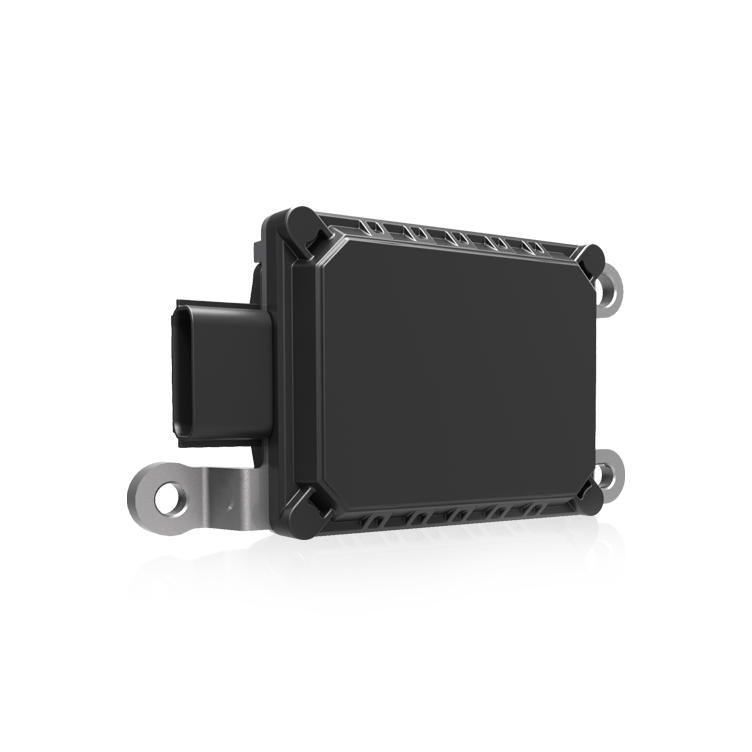
Comparative analysis begins with a clear baseline: procurement teams must weigh expected service life against steady-state power draw. Start by looking at the role a vehicle domain controller plays in consolidating functions—navigation, sensor fusion, and cockpit features—because consolidation changes the lifecycle dynamics and the system-level power budget. A modern passenger car typically integrates around 50 electronic control units (ECUs), which already shapes cooling, wiring harnesses, and software update strategies.
Why lifespan and power profiles determine sustainability
Durability and efficiency are the twin metrics that define sustainable sourcing. A module with long mean time between failures (MTBF) reduces replacement waste and service trips. Lower continuous power consumption reduces fuel or battery draw across millions of kilometers, shrinking lifecycle emissions. Consider thermal cycling: repeated temperature swings accelerate solder joint fatigue and shorten life. Likewise, inefficient SoC designs increase idle power, raising vehicle parasitic load and reducing range in electrified platforms.
Head-to-head comparisons: module types and their trade-offs
Compare three typical options when buying navigation core modules: automotive-grade SoC modules, repurposed consumer SoCs, and domain-consolidated modules. Automotive-grade SoCs cost more up front but score higher on temperature tolerance and MTBF. Consumer SoCs are cheaper and sometimes more power-efficient at idle, yet they lack automotive lifecycle testing and long-term availability commitments. Domain-consolidated modules reduce wiring and duplicate electronics, lowering system-level power and weight, but they concentrate failure risk—an acceptable trade only if redundancy and safe-state behavior are designed into the architecture.
Integration realities: software, communications, and verification
Integration touches software update strategy, bus architecture such as CAN bus or Ethernet, and verification burden. An automobile electronic control module that promises energy-efficient navigation still needs firmware lifecycle support and secure boot to remain reliable over time. Without planned OTA update paths, security patches and power-optimization firmware never reach the fleet—wear accumulates and efficiency gains disappear. Verification, including thermal cycling and EMC testing, is non-negotiable for realistic lifespan estimates.
Sourcing sustainability: materials, repairability, and supplier commitments
Responsible sourcing covers more than energy numbers. Ask suppliers for documented failure mode data, end-of-life (EoL) timelines, and recycled-material content. Look for long-term availability clauses and repair-part kits—these cut total material throughput. When a supplier guarantees availability and spare parts for a decade, fleets benefit from fewer replacements and lower disposal volumes. Suppliers who publish environmental product declarations make it easier to quantify embodied carbon and recyclability.
Common procurement mistakes to avoid
Procurement often chases upfront price without modeling total lifecycle cost—this is costly. Overlooking software support windows leads to premature component replacement when security or efficiency patches are needed. Underestimating system-level interactions—power distribution, harness resistance, and cooling—produces modules that perform well in isolation but badly in service. A typical error is trusting idle power numbers without measuring real-world duty cycles across mixed traffic and climate conditions—do the testing on your target fleet profile.
Three golden rules for choosing sustainable navigation cores
1) Metric-first sourcing: Rank suppliers by three measurable metrics—validated MTBF, measured in-field average power draw under your duty cycle, and guaranteed availability window. These form a defensible basis for selection. 2) Architect for domain efficiency: Prioritize modules that integrate functions where redundancy is safe and reduces wiring and total power. Verify that failure modes degrade gracefully. 3) Require lifecycle documentation: Demand thermal cycling reports, firmware support schedules, and an end-of-life plan that includes spare parts and recyclability commitments.
These rules steer procurement from guesswork to measurable outcomes, reduce replacement volume, and align component choices with fleet-level energy and sustainability targets. When suppliers match technical clarity with long-term support, teams can make confident, economical decisions that benefit operations and the environment. For practical execution and supplier evaluation frameworks, see how Archimedes Innovation frames modular assessment and lifecycle planning — a compact fit for procurement and engineering teams. —