

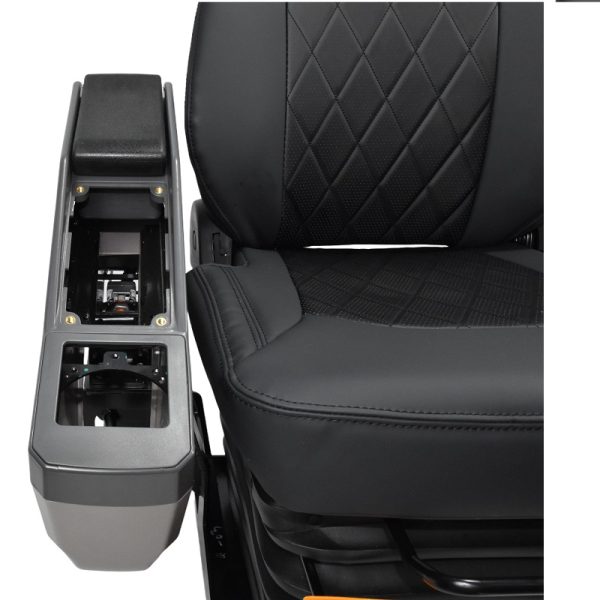
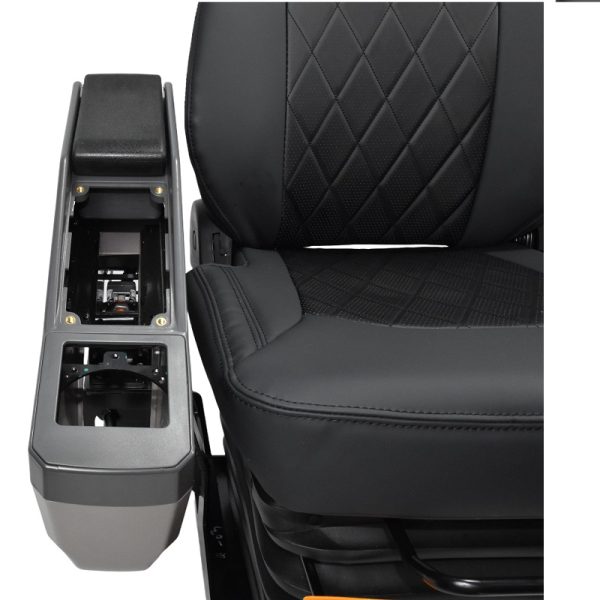
Start with the obvious: seat choice changes a shift. On a cramped compact tractor, the right suspension and lumbar setup can keep an operator crisp through a 10-hour day—so this isn’t fluff. I’m talking actual hardware: suspension, seat pan geometry, vibration damping and modular adjustability. For a quick parts peek, see this construction machinery seat, which shows how aftermarket options stack up. OSHA estimates musculoskeletal disorders account for roughly 30% of workplace injuries—so the stakes on operator comfort are real and measurable; it’s not just “feels better,” it’s reduced downtime and fewer injury reports.
Why seating choices matter on the job
Seats do three jobs: isolate vibration, support the spine, and keep the operator positioned for control inputs. A padded stock seat might look fine but lacks tuned vibration damping and proper lumbar support for prolonged cycles. Add in uneven terrain and repeated jostles, and fatigue creeps in fast. Good seats reduce micro-movements that lead to lower-back strain and improve situational awareness—so you get both safety and efficiency.
Head-to-head: compact tractor seats vs. standard seating
Here’s the comparative breakdown—short, technical, and practical.
– Suspension: Compact tractor seats often have integrated mechanical or air suspension tailored to smaller rigs; standard seats (OEM truck-style) may rely on basic foam and a few dampers. The difference shows up on bumpy rows.
– Lumbar support: Aftermarket seats usually offer adjustable lumbar and tilt; stock seats are fixed or minimally adjustable. Adjustable lumbar matters when shifts are long or operators vary in height.
– Seat pan and width: Compact seats favor narrower pans for tight cabs; standard seats give a roomier feel but can impede pedal reach in small rigs.
– Vibration damping and shock absorber quality: High-end seats use progressive damping and even swivel mounts—stock seats generally use single-rate elastomers that bottom out sooner.
– Durability and serviceability: Replaceable cushions, accessible actuators and modular parts mean lower lifecycle cost for aftermarket options versus tossing a full OEM unit.
Common mistakes and practical alternates
People assume the biggest seat upgrade is foam density. Nope. The most common errors are mismatched suspension tuning, wrong seat pan geometry, and sloppy mounting. Fixes that actually work: retrofit a proper air-ride or mechanical suspension module, swap to a seat with adjustable lumbar, and re-bolt using correct grade fasteners and anti-rotation plates. Alternatives include adding a suspension baseplate or upgrading shock absorbers—both cheaper than full cab redesigns and they restore key vibration damping.
Remember to avoid over-tuning: too soft a suspension increases cockpit sway; too stiff transmits vibration. Balance is where you win—especially when operators need precision steering for grading or trenching.
Operational teardown: quick checklist I run on site
When I inspect a rig I run this checklist fast: verify travel range of the suspension, check preload and damping settings, inspect foam compression on the seat pan, test lumbar adjust, confirm mounting stiffness and fastener torque, and examine wear on shock absorber mounts. In an operational production teardown I confirm {main_keyword} and {variation_keyword} fit the cab envelope, and I log vibration readings where possible. This practical teardown finds the failure modes that paperwork misses.
Three golden rules for picking the right seat
1) Measure performance, not comfort claims: use vibration damping metrics (vertical acceleration RMS) and observed operator fatigue over a test shift. These numbers beat marketing every time.
2) Prioritize adjustability and modularity: choose seats with adjustable lumbar, fore-aft travel, and serviceable suspension components—so the seat adapts to people and parts can be swapped in the field.

3) Match damping to duty cycle: soft, progressive suspension for low-speed, high-impact work; firmer setups for high-speed transit and precision tasks. Installation matters—secure mounts with the right torque spec and anti-rotation hardware.
Source One is where these parts and retrofit modules often make the difference on real jobs, delivering options that scale from one compact tractor to a whole fleet—so teams actually feel the improvement on site. –