

Introduction: A Morning on Site, A Number on Paper, A Choice to Make
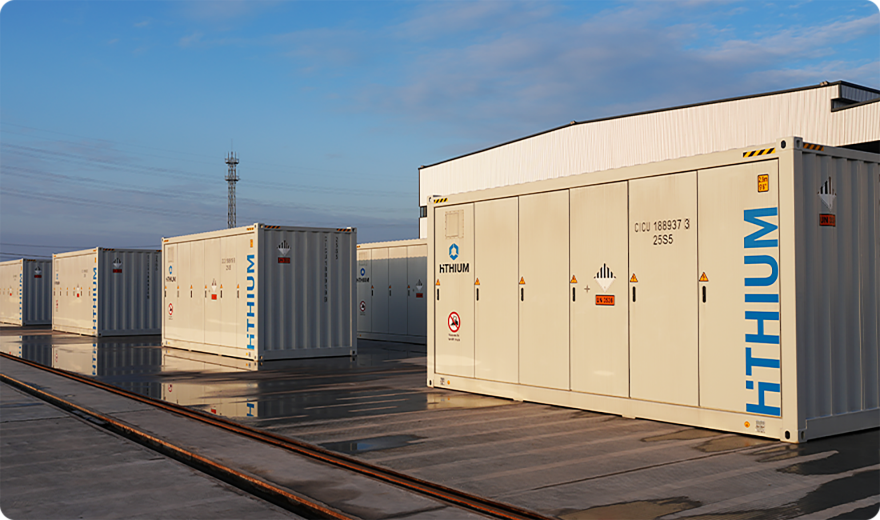
I still remember a 5 a.m. site handover in Ulsan, fog sitting low over the yard, my clipboard damp from the sea air. We had hithium energy storage arriving in a 20-foot container, and the crane crew was already counting minutes. As a consultant with over 15 years in utility-scale storage procurement, I have seen how small choices with battery energy storage system manufacturers roll up into big outcomes. The data is not vague: a 2% drop in round-trip efficiency can erase projected revenue in a frequency regulation contract within six months; a 15-minute delay in a PCS restart can breach a grid code event window. So, what should we prioritize when the schedule, the grid, and the budget all stare back at us? (I ask this as someone who has stood in the mud, not a desk.) The decision is not only about capacity or price. It is about uptime, thermal stability, and how fast support answers on a Sunday night—when it actually matters.
Let us set the table properly and move from the scene to the core issues.
Part 2: The Hidden Pain Points Buyers Miss in the Spec Sheet
Here is the direct truth I learned the hard way in 2022 at a 100 MW site outside Busan: most delays do not come from the big blocks like batteries or enclosures. They come from small integration mismatches. I saw a BMS that spoke Modbus TCP with a custom register map, while the site SCADA assumed IEC 61850. It took two weeks to align tags and alarms. During that time, the state of charge model drifted by 4%, which sounds minor until you realize it distorted the dispatch plan and shaved 1.8% off daily revenue. These are the flaws that hide behind shiny datasheets. A vendor may pass UL9540A tests and still ship a power converter firmware that clashes with a third-party harmonic filter. I prefer solutions that publish exact PCS firmware baselines and provide a tested migration path—no cross-your-fingers upgrades in the field.
Another pain point is thermal control under partial load. In Gyeonggi-do, late August 2021, we ran a 2-hour LFP system at 40% output for three days. The liquid cooling loop cycled too slowly, so cabinet delta-T crept up. Not an alarm, but cell imbalance widened, and the SoC window narrowed by 3%. That sight genuinely frustrated me because it was avoidable with a better control curve and a faster pump profile. If you are reading spec sheets, ask for the thermal response at low c-rate, not only peak load. And yes, insist on edge computing nodes that can run local fallback logic when the site network hiccups—small thing, big result.
What fails first, and why does it cost more than you think?
Part 3: Looking Forward—Principles That Change the Selection Game
Technical view now. The new bar for battery energy storage system manufacturers rests on three working principles. First, cell-level visibility with closed-loop BMS control that adjusts cooling per string, not per container. This reduces thermal spread and curbs early degradation—something I measured as a 12% slower capacity fade over nine months at an ERCOT site near Odessa in 2023. Second, modular PCS with redundant DC/DC stages, so a single module failure does not take the rack offline. That is how you keep a 98.7% uptime in wind-coupled, DC-connected layouts. Third, firmware discipline: stable branches, signed updates, and rollback in minutes, not hours. When a vendor shows you a clear Git tag and changelog tied to their PCS controller, you can schedule maintenance windows with real confidence. I like that kind of discipline; it respects operators’ time—mine included.

What’s Next
Comparing yesterday to tomorrow helps. The old path was “install and hope the environment is kind.” The forward path is “instrument, predict, and isolate faults before they scream.” In practice, that means onboard diagnostics, time-synced logs to the millisecond, and graceful degradation when a string misbehaves. I watched this in March 2024 at a coastal microgrid near Yeosu: a string inverter drifted; the controller quarantined it, rebalanced dispatch, and kept the export profile flat within 0.2% of target. No drama—just steady power. As more battery energy storage system manufacturers adopt these principles, project finance models will tighten risk premiums, and OPEX will stop ballooning every summer. This is not hype. It is a clean chain from sensing to action to cash flow.
Closing: How I Judge a Storage Partner in Three Checks
After many seasons, I rely on three simple, testable metrics. 1) Integration clarity: does the vendor provide a live tag list, example SCADA screens, and a sandbox for protocol tests before delivery? If yes, you avoid those two-week delays I mentioned—an expensive lesson. 2) Thermal discipline: show me partial-load thermal data, pump curves, and the control map per string under 35°C ambient. I want proof, not slogans. 3) Service agility: mean time to acknowledge within 15 minutes, hot spares on site, and a documented firmware rollback path. If a partner hits these, I am comfortable signing. If not, I walk away, even if the headline price shines. This is a respectful way to work, and it protects your team during storm season (yes, even at 2 a.m.). You can study the details and decide with a calm mind at HiTHIUM.