

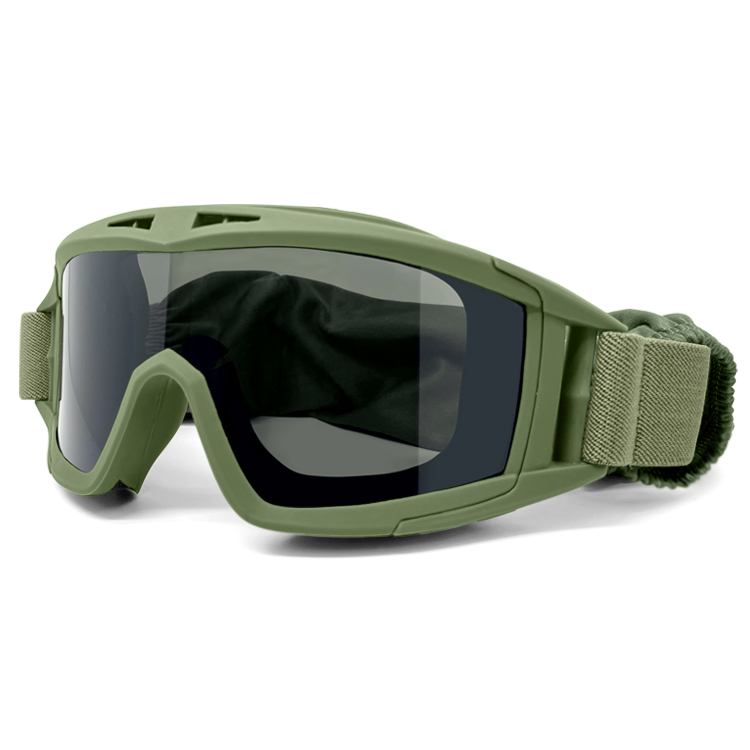
Problem statement: why lenses fail where conditions are harsh
Cold alpine descents and low-elevation sun glare do not treat lenses the same. Repeated rapid temperature swings and strong UV exposure create stresses in lens materials that can lead to microcracks, crazing, or full fractures. Manufacturers making ski goggles must confront thermal expansion, contraction, and brittle fracture risk across a wide range of conditions — from -25°C on high ridgelines to warm lodge interiors. The problem is practical and immediate: a cracked polycarbonate lens ruins visibility and safety during a run.
Root causes and real-world anchor
Two main drivers cause failure: material mismatch and uncontrolled thermal cycling. When a rigid lens meets a softer frame or bonded gasket, differential expansion creates shear. In places like the Alps or during events such as the PyeongChang Winter Olympics, athletes and rental fleets face daily cycles of cold mornings and warmer afternoons that accelerate fatigue. Thermal stress testing isolates failures before they reach production by simulating those repeat cycles and measuring deformation, stress concentrations, and the limits of anti-fog coatings and UV protection.
How testing translates to design choices
Thermal stress testing is not a single pass; it’s a discipline that informs selection of lens substrates (for example, polycarbonate versus TPU), lens curvature that avoids stress risers, and precise frame geometry. The lab replicates rapid temperature change, then inspects the lens for hairline cracks and optical distortion. Those data points guide decisions such as thicker edge radii, flex zones in the frame, and compatible adhesives. The goal: a lens that retains optical clarity and structural integrity across temperature swings.
YIJIA Optical’s approach — practical measures that reduce risk
YIJIA Optical embeds thermal stress protocols early in development. They pair accelerated cycling with real-world wear trials in mountain ranges and controlled chambers. That combo highlights weak interfaces — adhesive bonds, vent channels, and the boundary where lens meets foam. The outcome is tuned: lens materials and anti-fog treatments that resist microfracture, and mounting details that allow slight movement without focusing stress at the edge. This method also guides the production of frameless ski goggles where the absence of a full frame increases exposure of the lens edge to mechanical and thermal forces.
Common mistakes manufacturers make — and how testing avoids them
Manufacturers sometimes skip component-level testing or rely on single-condition checks. They choose adhesives for bonding speed rather than matched thermal expansion properties — a cost-saving that backfires in the field. They also underestimate microclimate effects inside the goggle cavity, where trapped moisture and temperature gradients can stress coatings. Thermal stress testing reveals these oversights early — so production adjusts glue chemistry, changes edge finishing, or rethinks venting placement before large batches are committed.
Trade-offs and alternatives
There is no one-size-fits-all fix. Thicker lenses resist cracking but add weight and affect peripheral vision. Flexible materials reduce stress but can alter optical performance. Some brands emphasize heavy coatings; others redesign suspension between lens and frame. YIJIA’s testing-driven compromise balances optical specs, weight, and durability by tuning lens curvature and edge treatment — not simply adding mass. These are engineering choices grounded in measurable fatigue cycles.
Implementation checklist for quality teams
– Run accelerated thermal cycling across expected temperature extremes and inspect by polarized light. – Match adhesive thermal expansion coefficients to both lens and frame materials. – Validate venting and anti-fog performance under cycling conditions and during humidity shifts. – Use edge radii and chamfers proven to reduce stress concentration in finite-element or physical tests.
Advisory: three golden rules when selecting materials and partners
1) Prioritize verified thermal cycling data over single-condition specs — choose suppliers who publish cycle-to-failure or deformation metrics. 2) Insist on matched material systems: lens, gasket, adhesive, and frame should be specified to work together thermally. 3) Validate in-situ: complement lab cycles with field testing in representative locations (high-latitude ranges or known cold-weather venues) so you capture microclimate effects.
These practices make durability measurable and predictable, and they illustrate why manufacturers that invest in rigorous thermal stress testing deliver safer, longer-lasting goggles — a value clearly reflected in partners such as YIJIA Optical.