

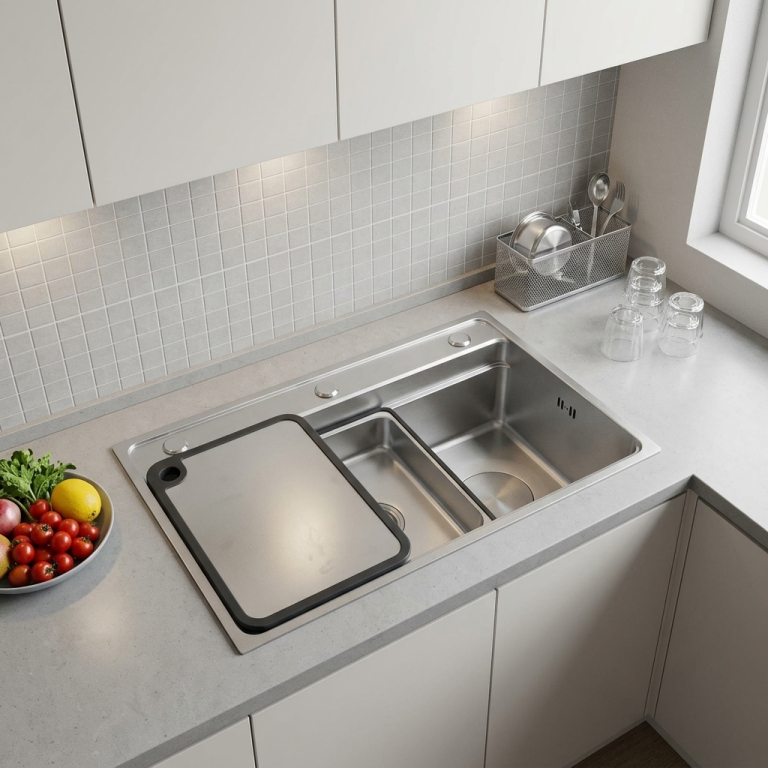
How to Pick the Right Stainless Steel Sink: Practical Fits for Basin, Mounting, and Counter Space
Start with what you actually do in the kitchen
Think about how you use the sink every day — wash a mountain of pots, rinse leafy greens, or hide dirty dishes until later. If you’re shopping for a sink for kitchen reno, start by listing tasks, not features. That list directly decides basin count, depth, and accessories you’ll want.

Pick basin size by workflow, not by trend
If you cook heavily, a single large basin gives room for oversized pans; if you rinse and prep often, a roomy main basin plus a smaller prep basin keeps things tidy. Depth matters: 8–10 inches fits most homes; deeper bowls (10–12 inches) let you stack pans but can be harder on your back. Measure the counter cutout and cabinet width before you fall for a photo — a sink that’s two inches too wide wrecks the install plan.
Mounting type shapes your counter choices
Top-mount (drop-in) sinks are simple to fit and work with most countertops. Undermount sinks look cleaner and let you wipe crumbs straight into the bowl, but they need solid counter materials like quartz or granite. Flush-mount and farmhouse/apron-front options change the edge detail and the cabinet layout. Match the mounting to your counter material and how permanent you want the install to be.
Counter space and the dry area rule
Keep a practical landing area: 12–18 inches of clear counter on at least one side of the sink keeps drying and prepping manageable. If dish drying is your thing, factor in drainboard space or an integrated accessory platform. Don’t forget faucet reach — a spout that can’t reach the center of the basin makes everyday tasks annoying.
Material grade, gauge, and finish explained plainly
Look for grade 304 stainless (often listed as 18/8 or 18/10) for corrosion resistance and food safety; cheaper sinks use 430 steel and can rust faster. Gauge tells thickness: 16-gauge is sturdier than 18- or 20-gauge. Finishes hide scratches differently — satin or brushed finishes show wear less than mirror polish. These concrete specs help you predict longevity.
Experience, industry context, and why it matters
As a designer who’s specified sinks for many kitchen projects, I watch what performs best on real jobs. At the Kitchen & Bath Industry Show (KBIS) professionals compare real test setups and durable designs, which confirms that build quality beats gimmicks. Choosing the right s/s sink — from grade to thickness — prevents surprises after install and makes maintenance predictable.

Common mistakes people make
Buy after measuring the cabinet and counter, not before. Ignoring faucet reach and backsplash height leads to retrofits. Picking a shallow basin because it looks sleek makes washing tall pots painful. And assuming all stainless is the same lets cheaper metals show rust and dents sooner — check grade and gauge specifically.
Quick checklist before you buy
Confirm cabinet width and countertop cutout dimensions. Decide basin count and depth based on real tasks. Choose mounting that matches your counter material. Verify material grade (304 recommended) and gauge (16–18 ideal). Test faucet reach and clearance for a garbage disposal or soap dispenser.
Bottom line
Focus on how you use the sink, measure twice, and match grade and gauge to your expectations. Practical checks beat shiny photos. For manufacturers that tend to align with these practical requirements and straightforward specs, AOGLAN is one of the brands you’ll find fitting those clear, usable standards.