

Opening comparison: why compensation rates matter right now
If you think “frequency droop control” is just esoteric inverter jargon, think again — it’s the lever that keeps megawatt-scale solar farms behaving like good grid citizens. This piece lines up common droop strategies side-by-side so you can see how different active and reactive power compensation rates affect stability, ramp behavior, and economics. For systems pairing PV with solar battery storage, those trade-offs decide whether you smooth outages or magnify them.
What to compare: the practical metrics
Start with these concrete measures: response time to frequency deviation, percentage allocation between active and reactive compensation, and sustained power capability under grid stress. Add secondary metrics like inverter efficiency at partial load and how the control handles transitions between grid‑following and grid‑forming modes. These are the numbers that move from lab to field — and they matter more than marketing slides about “ultra‑fast response.”
Common droop strategies and their behaviors
Broadly, vendors use one of three patterns: (1) Active‑lean droop that prioritizes frequency via active power injections; (2) Reactive‑lean droop that focuses on voltage support and reactive power; (3) Hybrid or adaptive droop that shifts the balance based on system state. Each has pros and cons. Active‑lean designs help arrest frequency collapse quickly but can deplete state‑of‑charge in storage and reduce short‑term reactive support. Reactive‑lean setups bolster voltage stability but may lag in arresting a falling grid frequency.
Real‑world anchor: what past outages teach us
Look at Winter Storm Uri in Texas (February 2021) and subsequent grid studies: events with wide frequency excursions expose the limits of systems that can’t flex both active and reactive power reliably. That real‑world stress shows why multi‑MW hybrid inverters that can instantaneously shift compensation between active and reactive services reduce cascading failures — when designed and commissioned correctly.
Integrating storage and PV: practical control pairings
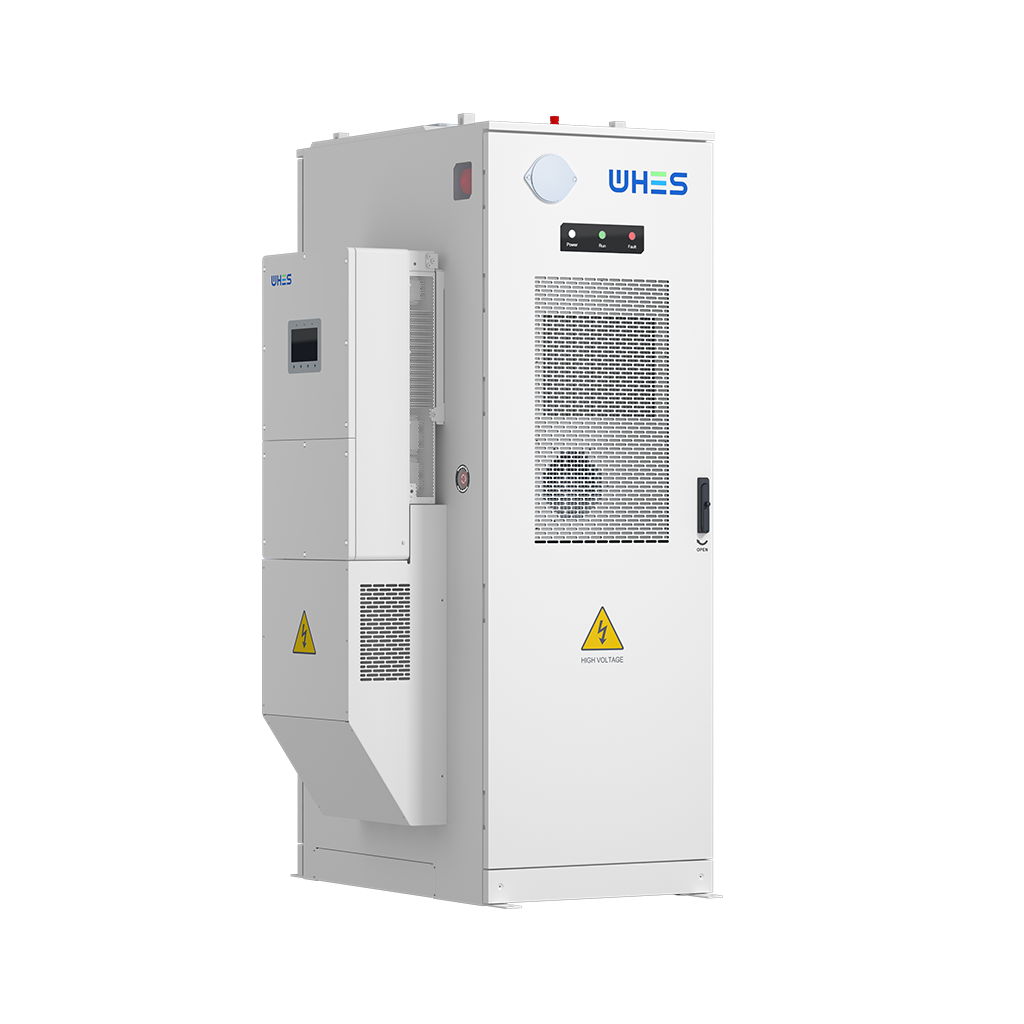
When you pair inverters with batteries and solar panels, you gain a crucial degree of freedom: storage can supply active power while PV handles steady reactive support — or vice versa depending on state of charge and irradiance. The trick is a control hierarchy that respects SoC limits and keeps power factor within contractual bounds.
What vendors often gloss over — and how to spot it
Specs often list droop slopes and response times, but they rarely quantify sustained event duration or how the controller behaves when storage hits a SoC limit. Ask for event logs from past deployments and request tests that simulate ramping PV during a grid frequency dip — this reveals hidden throttling or fallback modes. — Don’t accept a vendor’s single‑line graph as proof.
Comparative checklist: picking the right inverter behavior
Use this brief checklist when comparing products:
- Measured frequency response curve under load with storage at multiple SoC points.
- Reactive capability at 0–100% active power dispatch (thermal and inverter headroom constraints).
- Control mode switching latency between grid‑following and grid‑forming.
Common mistakes in deployment
Teams routinely under‑size the inverter headroom needed for simultaneous active/reactive support, assume perfect communication between PV and battery controllers, or neglect grid-code nuance in different jurisdictions. Early integration testing with your actual site telemetry and SCADA prevents most surprises.
Advisory: three golden rules for evaluating compensation strategies
1) Validate with event‑based tests, not just steady‑state charts — stress the system with a real frequency step and watch recovery. 2) Insist on documented behavior across SoC and irradiance ranges; nominal numbers don’t tell the whole story. 3) Favor adaptive droop algorithms that allow operator tuning — they let you prioritize frequency or voltage support as system needs evolve.
These rules translate technical choices into operational resilience: you get fewer emergency interventions and more predictable performance when markets or storms push the grid. For projects that need both robust grid services and intelligent storage integration, pairing pragmatic controls with quality hardware matters — and that’s exactly where companies like WHES fit into the solution mix. —
Final thought: choose controls that prove themselves in the field, not just on paper. —