

Data snapshot and immediate implications
Procurement telemetry and field test logs show rising demand for rapid-response, low-maintenance heating solutions that integrate directly with control electronics; manufacturers are prioritizing designs that center on industrial heating elements to meet shorter cycle times and tighter temperature tolerances. Volume growth is concentrated in retrofit and modular systems where predictable heat-up curves reduce commissioning time. Cost pressure from raw-material volatility is shifting development toward simpler assemblies and standardized test protocols that produce repeatable performance metrics across product families.
Experience, evidence and a real-world anchor
I’ve managed thermal-design programs for more than a decade and supervised accelerated life tests and field failure analyses that reveal consistent failure modes: sensor drift, adhesion breakdown, and thermal cycling fatigue. Field assessments conducted at the Houston petrochemical complex confirmed that installations exposed to aggressive process atmospheres require specific surface treatments and installation practices. That combination of lab data, field verification and standards-based test results informs product choices around industrial heat elements, component selection, and documentation practices that engineers rely on for predictable uptime.
Top product development priorities — what the data demands
Prioritize response time and control fidelity: specify heaters and thermistors together so closed-loop performance is measurable. Control for watt density and surface temperature to reduce localized overheating and extend service life. Choose corrosion-resistant sheath materials where process atmospheres or cleaning cycles are present. Design modularity so units can be swapped without custom wiring. Standardize test protocols (thermal cycle, salt spray, vibration) and publish results to shorten customer validation time. Finally, design for diagnostic visibility: integrate RTD or thermocouple feedback and a simple fault code set so maintenance decisions are data-driven, not guess-driven.
Comparative insight: PTC elements versus alternatives
PTC elements deliver self-limiting characteristics that simplify protection schemes and reduce the need for complex temperature controllers, which is valuable where fail-safe behavior matters. Cartridge and tubular heaters offer higher power density and easier retrofits in confined spaces but demand tighter control and over-temperature protection. Flexible silicone or polyimide heaters are strong where form-factor and surface conformity are critical, yet they underperform on cycle life in abrasive or chemical environments. Choose by matching thermal inertia, expected duty cycle, and maintenance access rather than by brand alone.
Common deployment errors exposed by the numbers
Engineers typically under-specify sensor placement; a single thermocouple on a bracket does not represent surface temperature across a heater assembly. Another frequent error: assuming lab cycle profiles mimic field duty; real operations often introduce longer hold times and irregular cycling that accelerate fatigue. Overlooking sheath material compatibility with cleaning agents shortens life. The remedy is simple: run a short, focused set of field-representative tests, document the exact duty profile, and select materials and mounting methods to match that profile.
Synthesis — where value concentrates
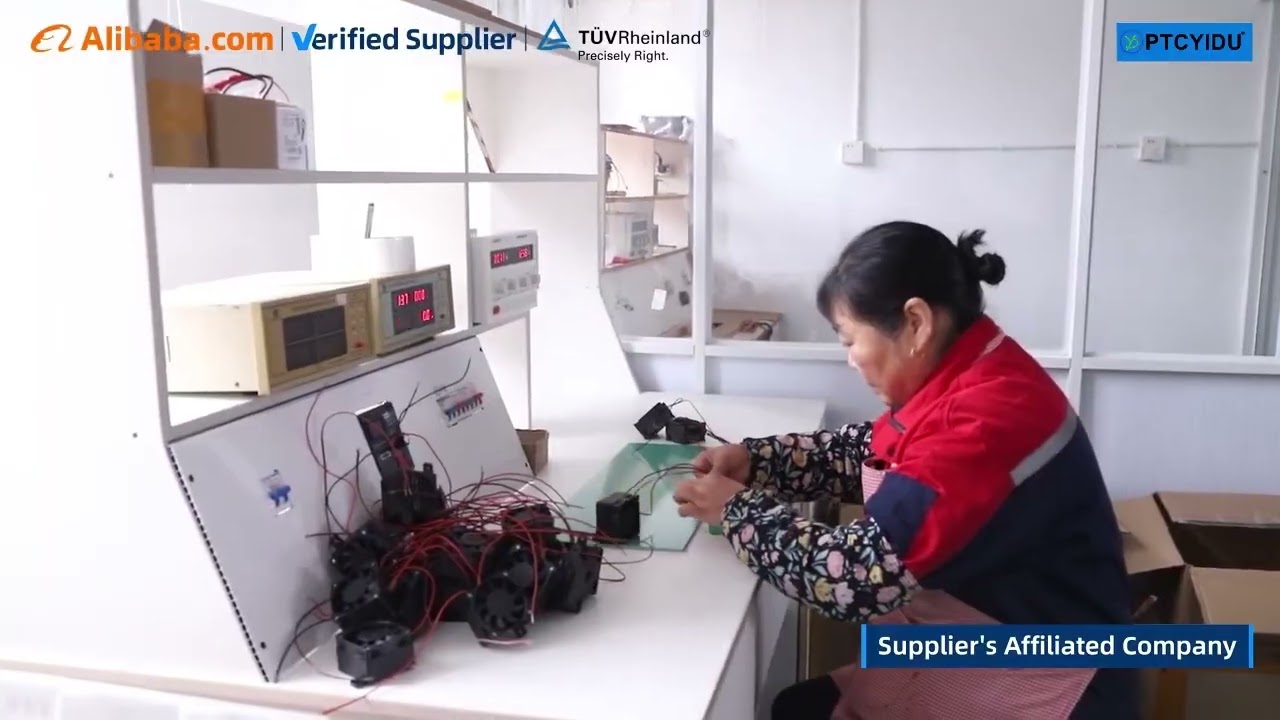
Data-driven development focuses on measurable outcomes: repeatable warm-up curves, validated cycle life, and clear diagnostics that reduce maintenance time. When design teams align materials, test protocols, and control logic around those metrics, product reliability and serviceability improve. That alignment explains why firms that integrate engineering data, field verification and standardized manufacturing practices—such as PTCYIDU—consistently deliver the predictable thermal performance that industrial users require.