

What you need right now
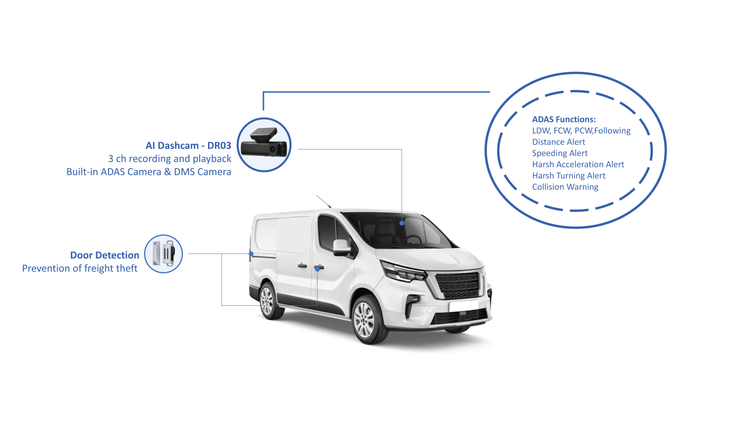
You run vans, you worry about time, safety, and costs — nothing fancy, just results. For many small operators, van fleet management tools stop being theory and start being useful when they tie together cameras, MDVRs, and GPS so drivers aren’t guessing and dispatch isn’t shouting. I’ve helped urban delivery teams map priorities and cut repeated mistakes during busy seasons in Mexico City, and that practical experience guides the steps here. If your goal is reliable route timing and clear incident evidence, adding proper delivery fleet management tech pays off fast, no drama.
How drivers actually use integrated tech
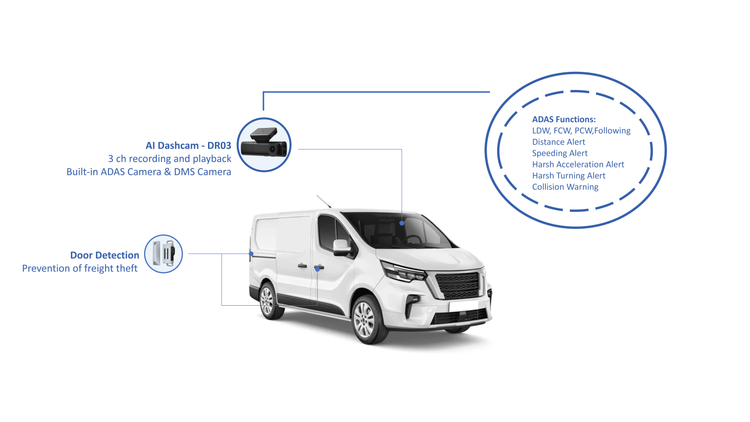
Think from the driver’s seat. They need things that don’t interrupt a shift and that prove what happened when something goes wrong. Focus on user-friendly gear and workflows:- Simple camera mounts that don’t blind the driver or block views.- MDVRs that record continuously but let you pull clips fast.- GPS that updates location and ETA without draining the tablet battery.Make sure controls are reachable, labels are plain (no techno-babble), and alerts are useful — not constant pinging. Drivers will accept one good alert that stops a crash; they won’t accept dozens of false alarms. Sí, that’s a trust thing.

Priorities when you plan integration
Start with three concrete priorities and keep them visible:- Evidence first: cameras + MDVRs must produce clear, timestamped video tied to GPS coords.- Minimal distraction: alerts should come only for real risks or major deviations.- Data access: supervisors must get secure clips and trip logs without chasing drivers.Prioritize power management and mounting. Bad mounts mean broken cams in a week; bad power setups mean corrupted footage. Solve those before you buy software licenses.
Common pitfalls — avoid these
Operators nearly always trip over the same mistakes:- Buying shiny software before confirming camera placement and network coverage.- Assuming every vehicle has steady cellular service; it doesn’t.- Letting vendors ship default settings instead of customizing alerts and recording quality.Don’t let a vendor’s demo drive decisions. Ask for field footage from the same vehicle class you run. Ask for a month-long trial on three vans, not just one demo ride. That shows what really happens on the street.
Hardware and software choices — quick comparisons
Keep choices simple and outcome-focused.- Camera types: dual-facing dash cams for driver behavior + rear cameras for curbside incidents.- MDVRs: choose units with solid-state recording and scheduled offload via Wi‑Fi to avoid heavy cellular bills.- GPS: prefer devices that stream location but batch-send detailed logs for analysis.If you want alternatives: pick an integrated kit for faster rollouts, or mix best-in-class cams with a modular MDVR if you need flexibility. Test interoperability — plug the camera into the MDVR, check timestamps, confirm GPS sync. If timestamps don’t match, nothing else matters.
Quick deployment checklist
Use this short checklist before pushing to all vans:- Mounts secured and verified in test drives.- Power wiring fused and hardwired (no cigarette lighter runs).- MDVR timestamps synced to GPS time source.- Alert thresholds tuned with driver input.- Data offload plan: Wi‑Fi at base + limited cellular for real-time alerts.Do a two-week pilot with real routes. Watch how drivers react. Tweak, then scale.
Final synthesis
Keep it driver-first: cameras and MDVRs must prove what happened, GPS must show where, and the system must stay quiet unless something matters. Small fleet teams get measurable gains when they sequence installation, test under real routes, and tune alerts with drivers. For practical, field-tested integration that respects drivers and ops, many teams find the right balance by working with partners who focus on small-van realities — like the solutions you see from BSJ — and then adapting settings to your streets and schedules. Gracias, amigos — roll it out smart, not loud.