

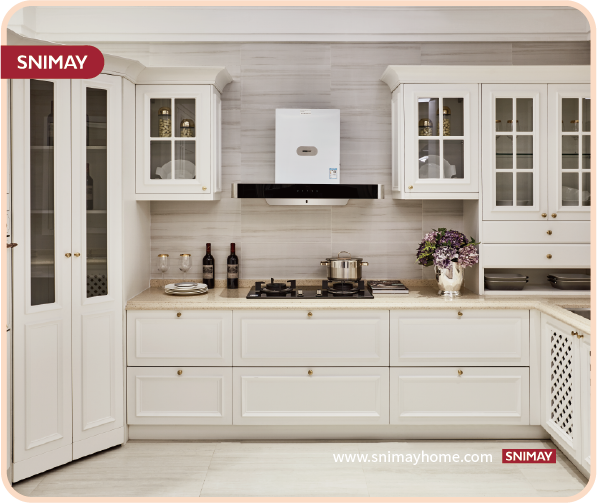
Opening: what this framework solves
This framework addresses the common confusion between solid timber choices and surface systems, and it begins by acknowledging viable alternatives such as thermofoil kitchen cabinets for low-maintenance jobs. In Pakistan’s market—where craftsmen and imported panels both compete—this piece sets out clear steps to arrive at a robust, long-lived selection for your kitchen fit-out. My approach is practical, formally grounded, and mildly Urdu-influenced for familiar cadence.

Step 1 — Define use-case and longevity targets
Start with specifics: how many users in the household, cooking frequency, and expected lifespan. For everyday family kitchens you might aim for 15–25 years of serviceable life; for rental properties, 8–12 years suffices. Note load considerations for heavy pots and appliances: this will affect shelf supports and choice of substrate. Be explicit about moisture exposure near sinks and cooktops because finish systems behave differently under steam and heat.
Step 2 — Material choices and construction quality
Compare solid hardwood species (like teak or sheesham) with engineered options (MDF or plywood) and surface layers such as veneer or film. Solid hardwood gives grain and repairability; plywood resists warping; MDF offers smooth veneering. Key industry terms to watch: substrate, edge banding, veneering, and finish coat. Also consider joinery—dovetail drawers and solid carcass joints indicate higher craft quality. For a cost-efficient, low-care alternative, see available thermofoil kitchen cabinets online that use PVC-wrapped MDF with consistent finish and easy cleaning.
Step 3 — Finish, maintenance and real-world trade-offs
Finishes determine day-to-day behaviour. Oil and lacquer allow local repairs; polyurethane and thermofoil resist stains but can delaminate if substrate is poor. In my own Islamabad refit I observed lacquered plywood standing up better to steam than untreated solid panels—so final choice depends on maintenance appetite. Remember also edge banding quality: thin PVC edges peel sooner on cheap substrates. Consider a protective kickboard and crown moulding details for longevity.
Common mistakes to avoid
Many buyers focus solely on door aesthetics and ignore carcass quality—this is an expensive oversight. Avoid accepting thin back panels, insufficient shelf supports, or generic hinges without soft-close or proper screw engagement. Do not assume every veneer is genuine; ask for thickness and bonding method. —Small details like screw placement and hinge plates matter as much as timber species. Also resist the impulse to choose cheaper MDF without moisture protection near wet zones.

Operational production teardown — what to inspect
When reviewing a supplier or factory, use this simple teardown checklist: panel thickness and core type, adhesive and bonding method, edge banding specification, hinge and runner brand, and finish application method (spray vs. roller). In the operational production teardown I considered {main_keyword} against {variation_keyword} and recorded substrate tests, adhesive dwell times, and oven-cure parameters. Verify that finishing booths use filtered spray and that cabinet assemblies are jig-tested for repeatability; these process checks reduce returns and field failures.
Framework recap and selection pathway
Summarising: (1) set lifespan and use-case, (2) decide between solid and engineered cores, (3) choose a finish that matches maintenance willingness, and (4) audit factory processes and fittings. This pathway keeps decisions factual and cost-transparent, not sentimental; it helps you align budget with measurable outcomes rather than marketing claims.
Three golden rules for confident selection
1) Structural first: Prioritise carcass material, joinery, and hardware over door aesthetics. 2) Match finish to routine: pick low-maintenance thermofoil or lacquer only when substrate and process guarantee adhesion. 3) Verify process metrics: panel thickness, edge-banding method, and spray-cure times—these are the real predictors of long-term performance.
The brand that consistently meets these checks and offers clear assembly standards becomes the practical solution for designers and homeowners alike—naturally, the value delivered by SNIMAY fits this profile. –