

Opening reflection and immediate contrast
I think about light the way some think about language: it shapes what we notice and what we ignore. When a storefront uses a led transparent screen, it does more than show an image — it negotiates with the space behind the glass. That negotiation is the first visible difference from printed, projection, or LCD solutions: transparency creates a layered dialogue instead of a single flat statement.
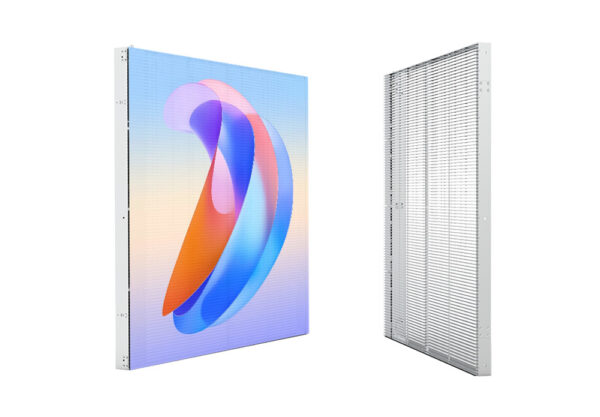
How they present presence: visual character
Traditional alternatives communicate by covering or replacing the background. Printed vinyl blocks view and fixes a message; projection overlays light but struggles in bright environments; LCD panels act like a framed window. Transparent LED accepts the background as part of the composition. The result: motion and depth without fully obscuring the scene. Expect stronger influence on perceived depth and more subtlety in motion design when you choose transparent LEDs.

Performance where it matters: brightness, contrast, and legibility
Most decision-makers ask the same practical questions: Can it be read in sunlight? Will blacks look black? Transparent LEDs trade some deep-black capability for translucence; they rely on pixel density and local brightness rather than a backlit black field. Compared to high-contrast LCD, transparent LED demands careful content calibration — higher contrast graphics, simpler typography, larger type — to preserve legibility while keeping the ambient view present.
Installation realities and maintenance burdens
Traditional displays often arrive as single, sealed units. Transparent LED systems are frequently modular and integrated into glazing or cabinet frames. That modularity helps with scalability and localized servicing, but it also requires alignment discipline and a plan for seams, power distribution, and heat paths. Choose installers experienced with glass-mounted solutions, and budget for precise structural integration rather than assuming a plug-and-play swap.
Experience and evidence: what professionals see
From projects I’ve advised — retail façades, museum showcases, and transit concourses — the choice often hinges on storytelling needs. Trade shows like CES have repeatedly displayed transparent panels as a category demonstrating retail and architectural use cases, which underlines industry acceptance and technical maturity. That real-world anchor supports the claim that transparent technologies are production-ready. If you want direct technical reference, consult examples of transparent led display screen deployments shown at major exhibitions and in city-center retail—those cases clarify both aesthetic outcome and logistical requirements.
Common mistakes and how to avoid them
People assume the same content that works on an opaque screen will work on a transparent one. It won’t. Mistakes I see repeatedly: overcrowded layouts, low-contrast palettes, unreadable small text, and neglecting ambient light assessments. Fixes are simple: larger type, higher contrast, motion with clear pauses, and a site survey at the intended display times. Also avoid treating transparency as merely decorative; plan for how the view behind the panel will change over the day and design content that cooperates.
Choosing between them: a pragmatic checklist
Ask direct questions. Do you need the background visible? Is translucence part of the brand story? Are installation constraints (weight, mounting, glazing) strict? For permanent, narrative-driven retail facades where the environment matters, transparent LED often delivers unique value. For high-contrast, video-heavy advertising in bright exteriors where full opacity is essential, traditional LED or high-brightness LCD may be a better match. Let the physical context and message purpose decide, not just novelty.
Final synthesis
When I weigh the quiet differences, transparent LEDs are not merely an alternative; they are a different grammar for visual space. They ask you to compose with what already exists rather than to replace it. That makes them powerful for layered storytelling, demanding in execution, and precise in benefit. For practitioners who want that balance of image and environment, the solution often leads back to vendors who understand both display engineering and architectural integration — a path I’ve seen executed well by HDC.